
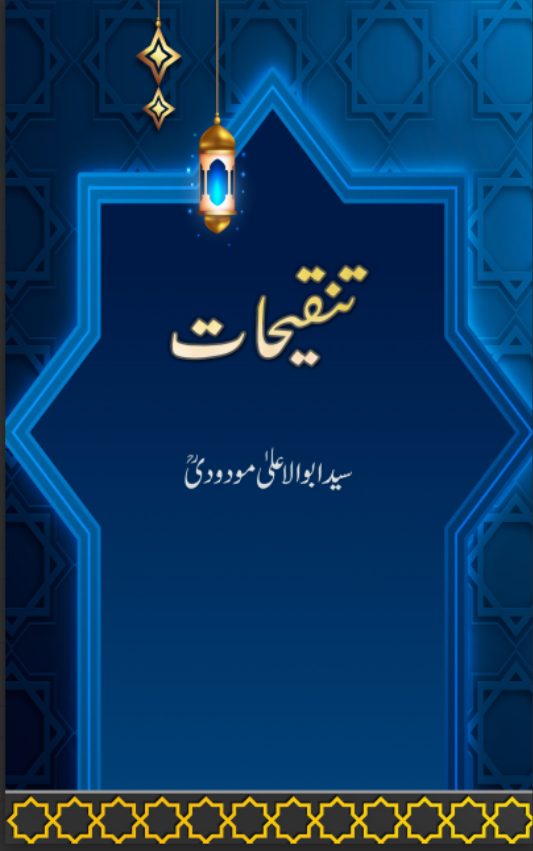
Description
Key Essays and Topics
- The book contains 20 essays, including notable titles such as:
- Our Intellectual Slavery and its Causes.
- The Decline of Islamic Civilization in India.
- The Sick Nations of the Modern Era.
- Human Law vs. Divine Law (Analyzing the failure of prohibition in America).
- The Suicide of Western Civilization.
- The Fundamental Flaw in Our Educational System.
Intellectual Analysis
- Intellectual Slavery: Maududi argues that dominance is twofold: political/material and intellectual/moral. He posits that Muslims are suffering from both, often judging their own faith by Western standards.
- Foundations of Western Civilization: The author suggests that Western civilization is rooted in atheism, materialism, and the denial of revelation. This contrasts with Islamic civilization, which is built on the sovereignty of God and the concept of the Hereafter.
- Lack of Research and Ijtihad: A major cause of Muslim decline is identified as the abandonment of intellectual inquiry and Ijtihad (independent reasoning), which led to the loss of global leadership to the West.
- Educational System: He critiques Muslims for adopting Western education solely for economic gain, which resulted in younger generations becoming estranged from Islamic principles.
- Proposed Solutions
- Maududi argues that for a true “Renaissance” (Nash’at-e-Jadeed), Muslims must:
- Produce thinkers capable of dismantling the intellectual foundations of Western civilization.
- Establish a new system of philosophy and natural sciences based on the thought process outlined in the Quran.
- Regain control over the “engine of research and thought” to change the direction of global progress.